

EM® ceramic beads are now one of the most popular eco-friendly alternatives to traditional water filters and plastic bottles. Used to improve tap water quality, reduce chlorine, limit limescale, and promote a more neutral-tasting water, they are part of a zero-waste and sustainable approach.
But what exactly are EM® ceramic beads? How do they work? Are they effective? What are their health and environmental benefits? And how can they be used properly to optimize their performance?
In this comprehensive guide, we provide an in-depth analysis of EM® technology, its mechanisms of action, environmental benefits, practical applications, and selection criteria. If you're looking for a natural, plastic-free way to purify your water, this article is for you.
1. What are EM® ceramic beads?
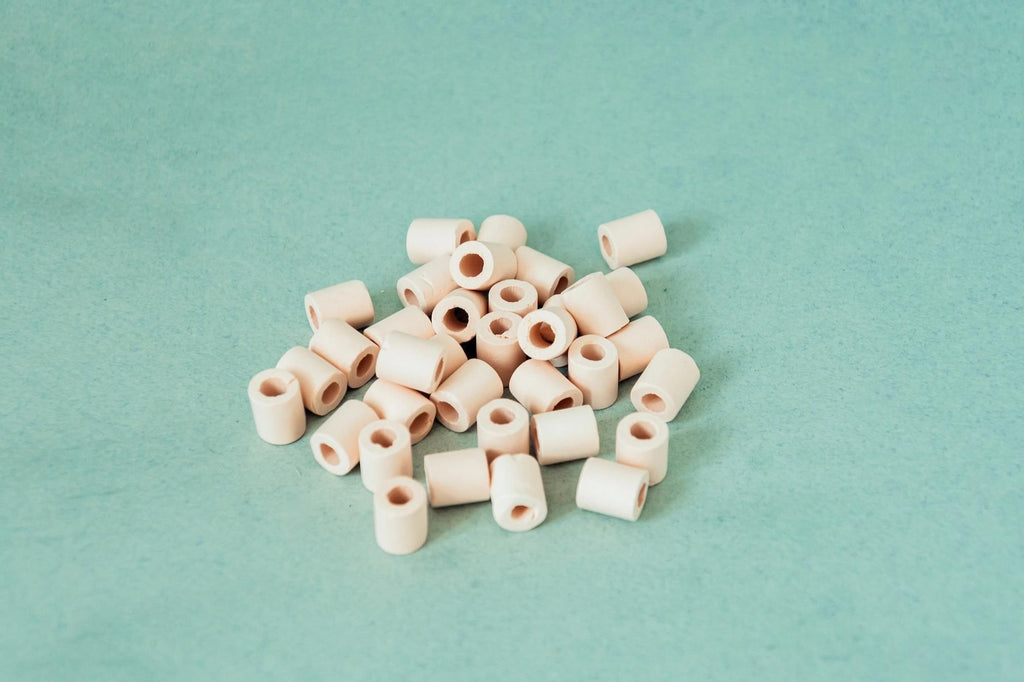
EM® ceramic beads are small cylinders or tubes made of high-temperature fired clay, enriched with Effective Microorganisms (EM®) . This technology was developed by Professor Teruo Higa in the 1980s.
EM® are a consortium of beneficial microorganisms (lactic acid bacteria, yeasts, photosynthetic bacteria) selected for their positive environmental properties. When incorporated into ceramics and then fired, their structural imprint remains active within the material.
The microporous ceramic acts as a mineral support capable of interacting with water, contributing to:
- Reduce the taste and smell of chlorine
- Limit limescale deposits
- Improve the structure of the water
- Favor water with a more neutral taste.
2. How do EM® ceramic beads work?
The mechanism of action is based on several physical and mineral phenomena:
• Interaction with chlorine
The beads help to reduce free chlorine, which is responsible for the unpleasant taste of tap water.
• Action on limestone
They modify the crystallization of calcium carbonate, which limits the adhesion of limescale to surfaces.
• Water energizing
The microporous structure of the ceramic promotes molecular reorganization, improving solubility and mouthfeel.
3. Why use ceramic beads to filter water?
Improve the taste of tap water
The main user feedback concerns the improvement in taste and the reduction of the chlorine smell.
Reduce the use of plastic bottles
Each French person consumes on average several dozen plastic bottles per year. Switching to ceramic beads drastically reduces this dependence.
Sustainable and zero-waste solution
One refill of beads can last up to 6 months. No disposable plastic, no chemical consumables.

4. EM® ceramic beads vs. plastic cartridge filters
Strategic comparison:
- Shelf life: 6 months vs. 1 month for cartridges
- Waste: Zero plastic vs. disposable cartridge
- Carbon impact: low vs. high (production + transport)
- Long-term cost: very economical
5. The different types of EM® beads
Grey Pearls: improving taste & drinking water
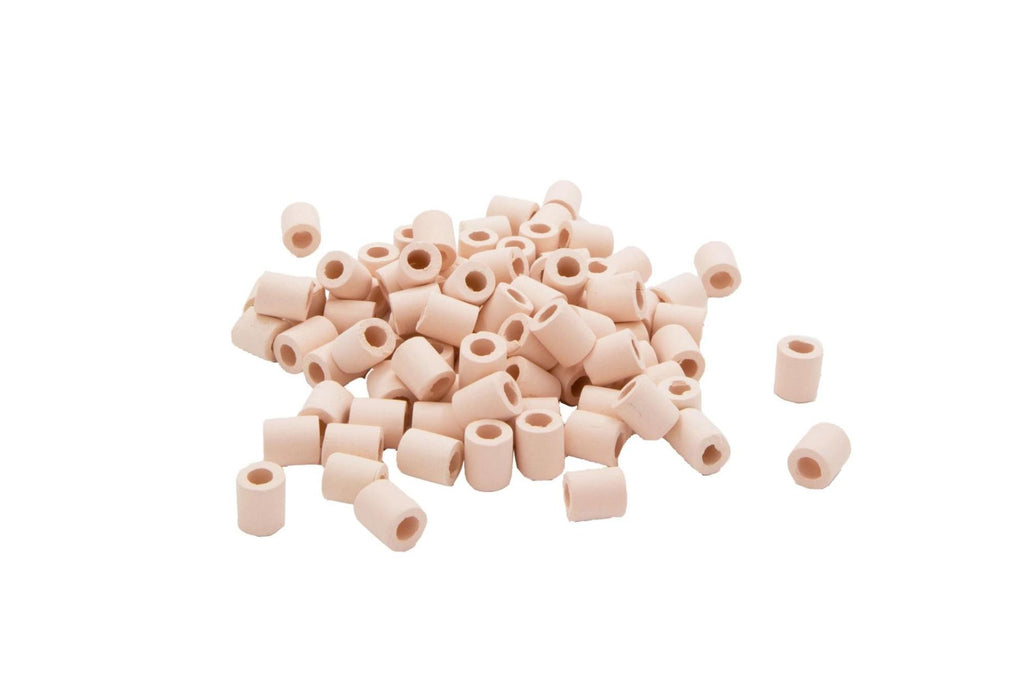
Pink pearls: enhanced chlorine reduction
Shower pearls: skin & hair comfort
See our set of EM® ceramic beads

6. Optimal operating instructions
- Boil for 10-15 minutes before first use
- Place 10-15 pearls per liter of water
- Leave on for a minimum of 30 minutes (ideally 4 hours)
- Rinse once a month
- Replace after 6 months
7. Positive environmental impact
By adopting EM® ceramic beads, you:
- Reduce plastic waste
- Reduce your carbon footprint
- Limit the production of disposable filters
- Encourage responsible consumption

8. FAQ – EM® Ceramic Beads
Do the pearls eliminate bacteria?
They improve water quality but do not replace a certified microbiological filtration system.
How many pearls per liter?
Approximately 10 to 15 pearls per liter of water.
Can they be used in a water bottle?
Yes, perfectly suited to stainless steel or glass water bottles.
Can they go in a kettle?
Yes, to limit limescale.
9. Conclusion
EM® ceramic beads offer an ecological, sustainable, and economical solution for improving tap water quality. They fit perfectly into a zero-waste approach and significantly reduce plastic use.
If you want to improve your water while reducing your environmental impact, this is the simplest alternative to implement.